

The Outlook for the Artificial Intelligence (AI) in Predictive Toxicology Market Strengthens as Global Demand Increases
Artificial Intelligence (AI) in Predictive Toxicology Market
Artificial Intelligence (AI) in Predictive Toxicology Market Share
Artificial Intelligence (AI) in Predictive Toxicology Analysis
The Business Research Company’s The Outlook for the Artificial Intelligence in Predictive Toxicology Global Market Report 2026–Market Size, Forecast 2026-2035
LONDON, GREATER LONDON, UNITED KINGDOM, October 27, 2026 /EINPresswire.com/ -- The integration of artificial intelligence (AI) into predictive toxicology is rapidly transforming drug development and safety assessment processes. This market is poised for remarkable growth as AI technologies become increasingly vital for faster, more accurate toxicity prediction, enabling pharmaceutical and life sciences sectors to improve efficiency while reducing reliance on traditional methods. Here’s an in-depth look at the current market landscape, key growth drivers, regional dynamics, segmentation, and competitive environment within this innovative field.
Forecasted Market Value and Positioning of AI in Predictive Toxicology
By 2030, the Artificial Intelligence (AI) In Predictive Toxicology market is expected to exceed $2 billion. This niche forms a significant portion of the broader AI In Pharma market, which is projected to reach around $11 billion by the same year. Specifically, AI in predictive toxicology will make up roughly 21 percent of the AI In Pharma sector. When viewed against the expansive Information Technology industry, anticipated to hit $13,788 billion by 2030, this specialized market will represent about 0.02 percent of the total value.
Request A Free Sample Of The Artificial Intelligence (AI) In Predictive Toxicology Market Report
https://thebusinessresearchcompany.com/sample_request?id=45386033&type=smp&name=Artificial%20Intelligence%20%28AI%29%20In%20Predictive%20Toxicology%20Market%20Report%202026&utm_source=EINPresswire&utm_medium=Paid&utm_campaign=Oct_PR
Asia-Pacific’s Leading Role in AI Predictive Toxicology by 2030
Asia-Pacific is set to emerge as the dominant regional market for AI in predictive toxicology, valued at approximately $0.80 billion in 2030. This represents a significant leap from $0.18 billion in 2025, reflecting a robust compound annual growth rate (CAGR) of 34 percent. This rapid expansion is largely driven by the region’s flourishing pharmaceutical and biotech research sectors, increased investments in AI-driven drug discovery platforms, widespread adoption of computational toxicology by contract research organizations, strong governmental backing for life sciences innovation, and the ready availability of extensive biomedical datasets that facilitate advanced AI model development.
The USA’s Leading Position Among Countries in the Market
In terms of individual countries, the USA is expected to hold the largest market share in AI for predictive toxicology by 2030, with a valuation of $0.69 billion. Growing from $0.22 billion in 2025, the market in the USA is anticipated to expand at a CAGR of 26 percent. Factors underpinning this growth include the presence of leading AI technology innovators and pharmaceutical firms, increasing regulatory acceptance of computational safety assessments, substantial investments in precision medicine and computational biology, active collaboration between tech companies and drug developers, and continuous improvements in cloud-based AI platforms applied to predictive toxicology.
Access The Detailed Artificial Intelligence (AI) In Predictive Toxicology Market Report Here
https://thebusinessresearchcompany.com/report/artificial-intelligence-ai-in-predictive-toxicology-global-market-report?utm_source=EINPresswire&utm_medium=Paid&utm_campaign=Oct_PR
Dominance of Solutions Segment within AI Predictive Toxicology Market
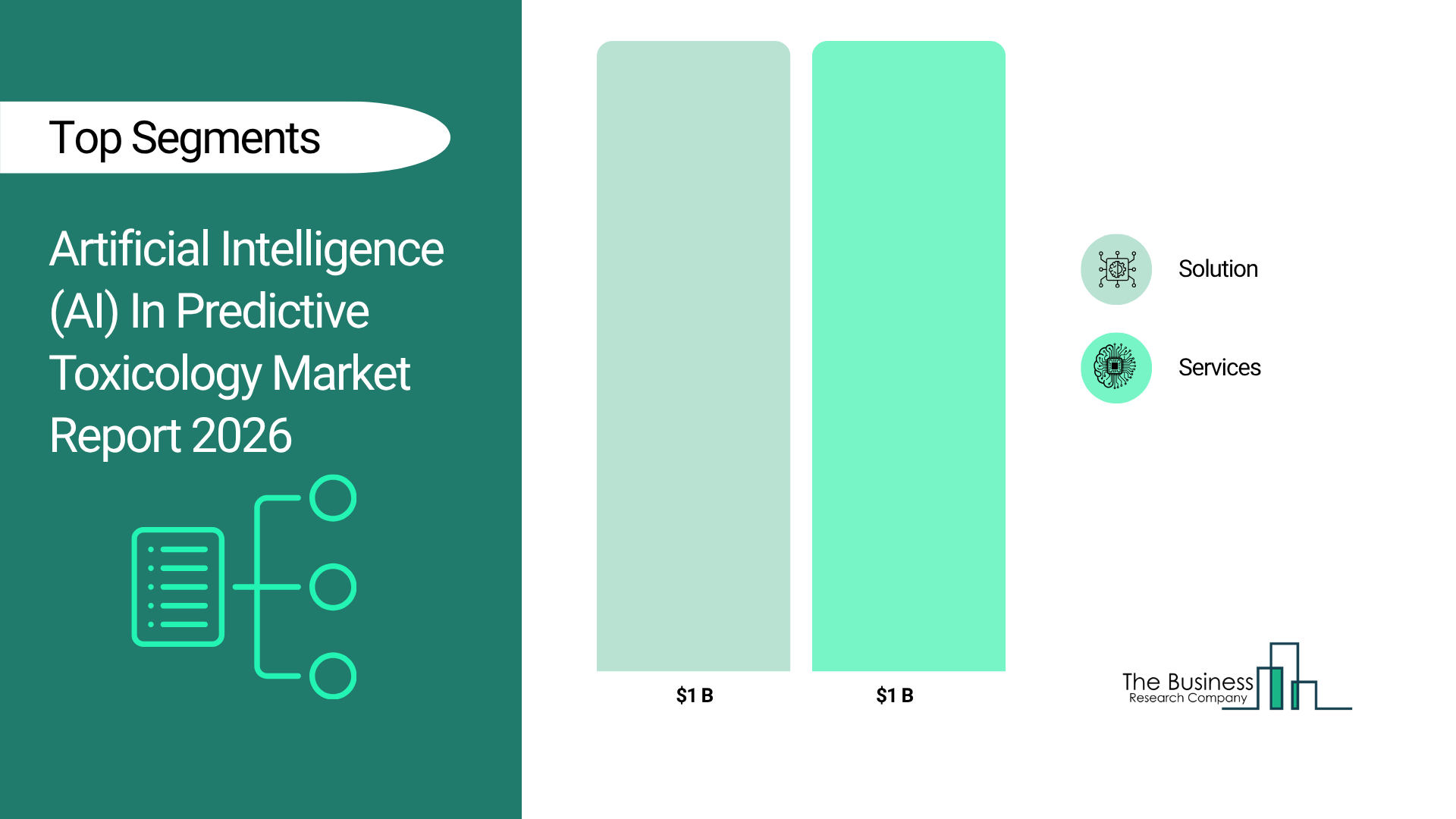
When broken down by components, the solutions segment will command the largest share, accounting for 63 percent of the AI in predictive toxicology market—or approximately $1 billion in 2030. This segment’s growth is fueled by expanded deployment of AI-powered toxicity prediction software, rising demand for integrated platforms supporting computational safety assessments, broader use of predictive analytics in preclinical research, growing reliance on automated decision-making tools, and ongoing advancements in machine learning algorithms for toxicity evaluation.
Market Breakdown by Technology, Toxicity Endpoint, and End User
The AI in predictive toxicology market is also categorized by technology into machine learning and other advanced methods. Regarding toxicity endpoints, the market covers genotoxicity, hepatotoxicity, neurotoxicity, cardiotoxicity, and various other toxicity categories. End users range across pharmaceutical and biotechnology companies, chemical and cosmetic industries, contract research organizations, and other sectors utilizing predictive toxicology solutions.
Projected CAGR Reflecting Vigorous Market Expansion
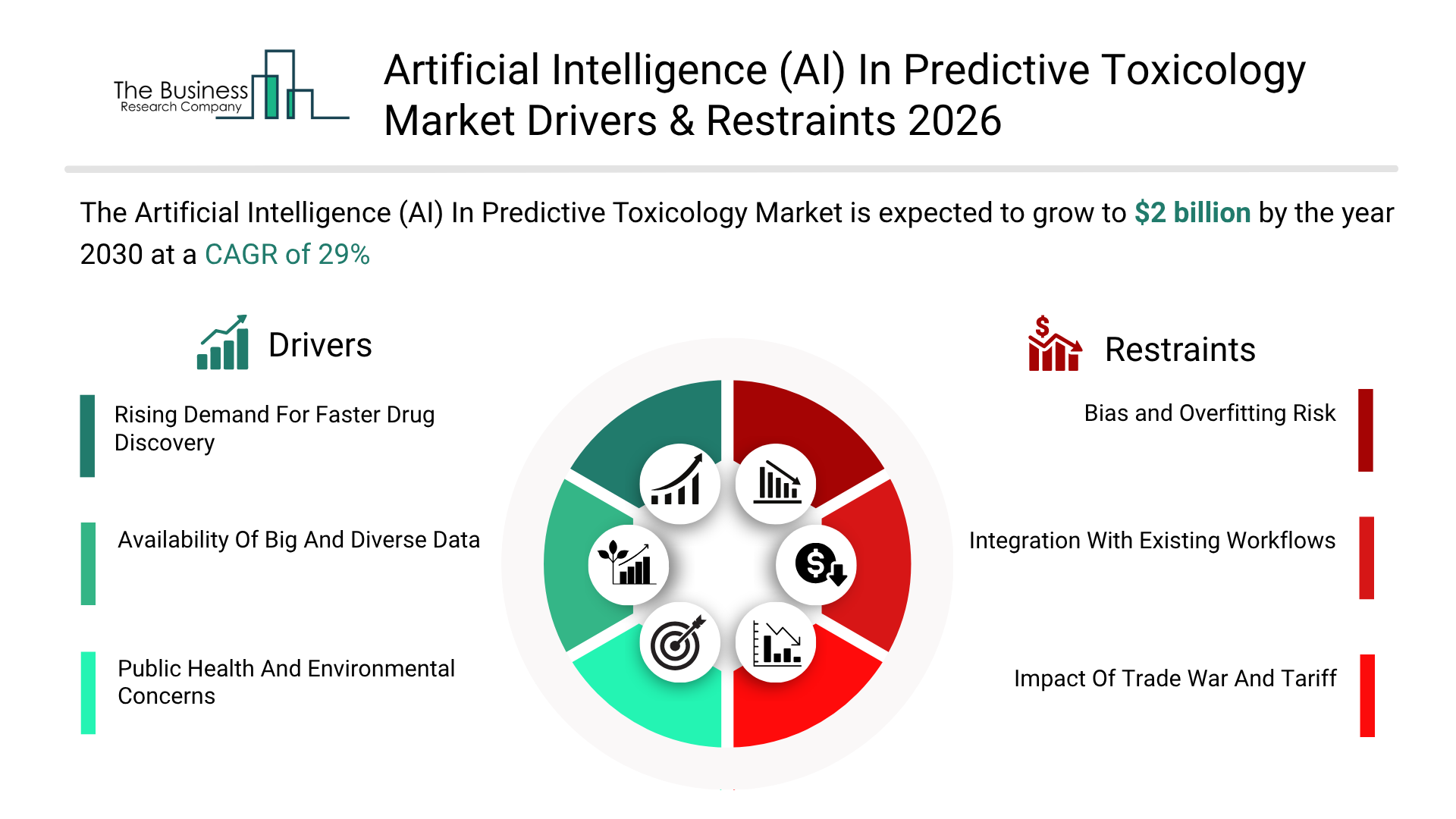
The market is forecasted to grow at a compound annual growth rate (CAGR) of 29 percent leading up to 2030, underscoring the rapid adoption and integration of AI technologies in predictive toxicology and drug safety evaluation.
Primary Factors Accelerating Market Growth Through 2030
The surge in demand for quicker drug discovery is a pivotal factor driving market expansion. Pharmaceutical and biotech firms are increasingly employing AI-enabled predictive toxicology tools to flag potential safety issues early in drug development, which helps reduce costly failures at later stages and streamlines candidate selection. AI-driven toxicity prediction enables faster decision-making, better resource management, and shortened timelines, thereby improving preclinical research efficiency. This increasing reliance on AI-supported drug discovery is expected to contribute roughly 1.3 percent annual growth to the market.
Another critical growth driver is the growing availability of extensive and varied data sets. The increasing volume of toxicological, genomic, proteomic, chemical, and clinical data is enabling the creation of more accurate and reliable AI models for toxicity prediction. High-quality, multi-source data enhances algorithm performance and extends applications in pharmaceutical and chemical safety research. This factor is projected to add about 1.0 percent annual growth to the market.
Public health and environmental concerns also play a significant role in fueling market development. Heightened emphasis on reducing animal testing, improving chemical safety assessments, and meeting evolving regulatory standards is accelerating the adoption of AI-based in silico toxicology methods. Organizations use predictive models to support safer product development, enhance environmental risk evaluation, and ensure compliance with modern regulations. These concerns are estimated to contribute around 0.8 percent annual growth to the market.
Emerging Growth Opportunities in the Solutions and Services Segments
The most promising avenues for expansion lie within the solutions and services segments, which together are expected to surpass $2 billion by 2030. This growth is propelled by the increasing adoption of AI-enabled toxicity prediction platforms, a broader application of computational safety assessments in pharmaceutical research, growing investments in cloud-based predictive analytics, and rising demand for regulatory-compliant in silico testing tools. These factors reflect the life sciences industry's commitment to accelerating drug development, enhancing predictive accuracy, and minimizing dependence on traditional toxicity testing.
Between 2025 and 2030, the solutions segment is anticipated to grow by $1 billion, matched by an equal growth in the services segment. The market features a mix of AI-driven life sciences software providers, computational toxicology experts, and biotechnology firms. These companies are focusing on machine learning-based toxicity predictions, in silico safety platforms, high-throughput data analytics, explainable AI capabilities, and the integration of predictive toxicology within drug discovery and chemical risk workflows. Efforts to reduce animal testing, increase prediction accuracy, speed up preclinical safety assessments, and comply with changing regulations remain central to their strategies. Understanding the competitive landscape is crucial for stakeholders aiming to seize growth opportunities, innovate technologically, and form strategic partnerships in this evolving market.
Certara Inc. Leading the Market with AI-Powered Predictive Toxicology Solutions
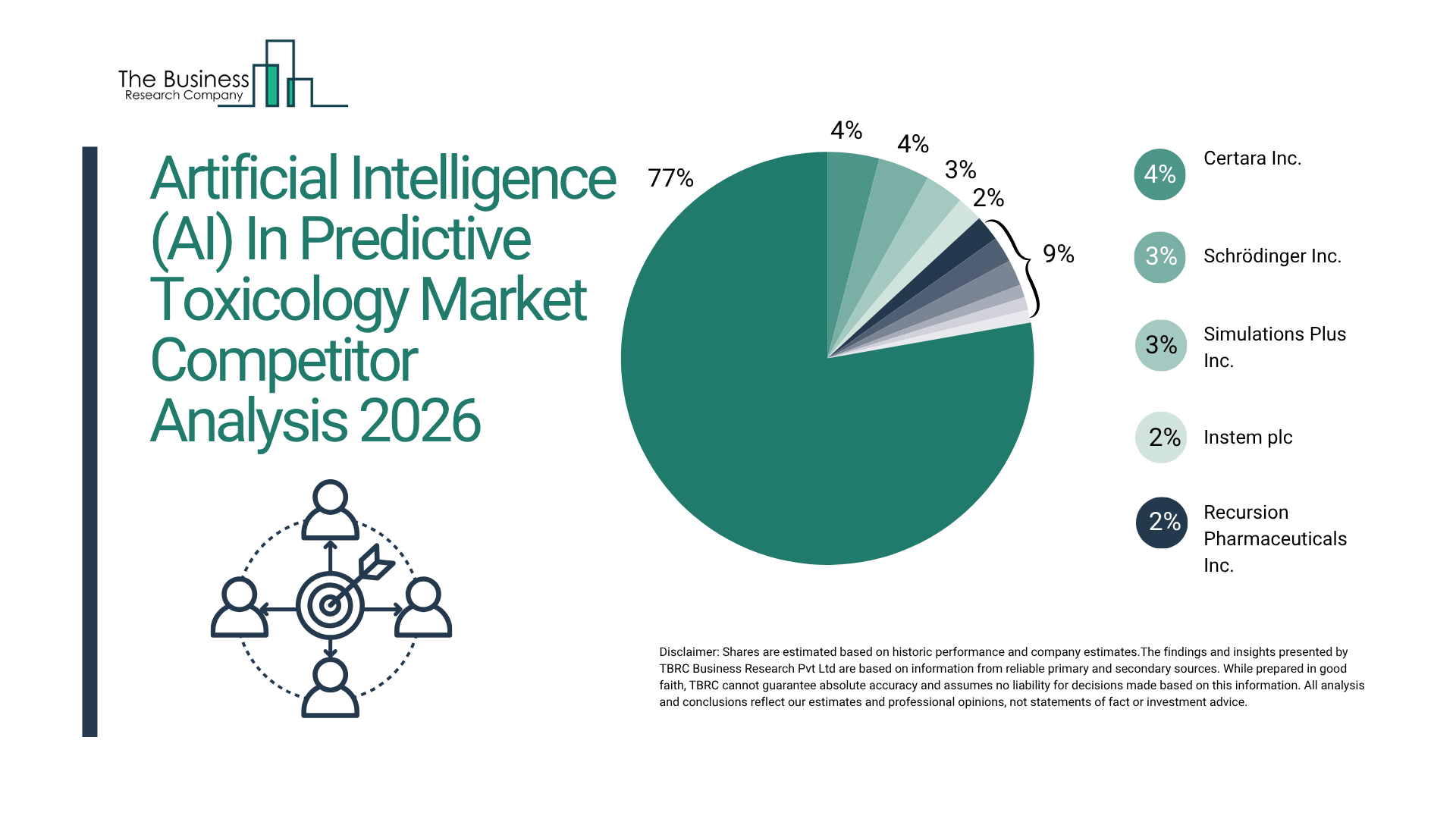
Research indicates that Certara Inc. led the global artificial intelligence (AI) in predictive toxicology market in 2025, holding a 4 percent share. Their portfolio includes AI-powered predictive toxicology and biosimulation tools offering advanced computational models, toxicity prediction software, mechanistic simulation, and in silico safety assessments. These solutions support early toxicity screening, regulatory decision-making, enhance drug development efficiency, and improve chemical safety evaluations within pharmaceutical and life sciences sectors.
Key Industry Players Driving Innovation in AI Predictive Toxicology
The market comprises several influential companies including Certara Inc., Schrödinger Inc., Simulations Plus Inc., Instem plc, Recursion Pharmaceuticals Inc., Insilico Medicine Inc., BenevolentAI, Merative L.P., ChemAxon Ltd., Optibrium Ltd., ArisGlobal, Chemotargets S.L., ACD/Labs, Leadscope Inc., Biovista Inc., Toxys B.V., Berg Health (BPGbio), MultiCASE Inc., Algorithme Pharma, Celsius Therapeutics Inc., and BioTeam Inc. These players are pivotal in advancing AI-driven toxicology platforms and computational safety assessment tools.
Market Concentration Reflects Moderate Fragmentation and Entry Barriers
The AI in predictive toxicology market is moderately fragmented, with the top 10 companies accounting for 23 percent of total revenue in 2025. This moderate concentration level is influenced by barriers such as the need for validated AI algorithms, access to high-quality toxicological data, regulatory acceptance of computational safety methods, and specialized expertise in predictive modeling and life sciences. Leading firms, including Certara Inc., Schrödinger Inc., Simulations Plus Inc., Instem plc, Recursion Pharmaceuticals Inc., Insilico Medicine Inc., BenevolentAI, Merative L.P., ChemAxon Ltd., and Optibrium Ltd., maintain significant market shares through comprehensive AI toxicology platforms, advanced modeling capabilities, strategic pharma partnerships, and ongoing innovation in predictive safety technologies. As demand grows for accelerated toxicity screening, data-driven risk evaluation, regulatory-compliant in silico testing, and AI-powered drug development, innovation, alliances, and platform expansion will further enhance these companies’ competitive standing.
Prominent Raw Material Suppliers Supporting the Market
Key suppliers providing essential raw materials and technologies for the AI in predictive toxicology market include Thermo Fisher Scientific, Illumina, QIAGEN, Agilent Technologies, Revvity, Bio-Rad Laboratories, MilliporeSigma, Charles River Laboratories, Labcorp, Eurofins Scientific, GenScript Biotech, Sapio Sciences, DNAnexus, Benchling, Oracle Corporation, Amazon Web Services, Microsoft Corporation, Google Cloud, and NVIDIA Corporation. These companies supply critical data, tools, cloud infrastructure, and computing power vital for AI development and predictive toxicology applications.
Leading Wholesalers and Distributors in the AI Predictive Toxicology Landscape
The distribution network for this market is supported by major players such as VWR International, Fisher Scientific, Avantor, Thermo Fisher Scientific eCommerce, Carahsoft Technology, SHI International, CDW Corporation, Insight Enterprises, Softchoice Corporation, SoftwareONE, Crayon Group, TD SYNNEX, Ingram Micro, Redington Limited, Bechtle AG, Computacenter plc, Arrow Electronics, Westcon-Comstor, Bytes Technology Group, and Noventiq. These organizations facilitate the delivery of AI tools, software, and services to end users worldwide.
Principal End Users of AI in Predictive Toxicology Technologies
The primary consumers of AI predictive toxicology solutions include major pharmaceutical and biotechnology companies such as Pfizer Inc., Roche Holding AG, Novartis AG, Merck & Co., Johnson & Johnson, AstraZeneca PLC, Sanofi SA, Bristol Myers Squibb, Eli Lilly and Company, GSK plc, Bayer AG, AbbVie Inc., Amgen Inc., Boehringer Ingelheim, Takeda Pharmaceutical Company, Novo Nordisk A/S, Regeneron Pharmaceuticals, Biogen Inc., Moderna Inc., and Gilead Sciences Inc. These organizations leverage AI tools to enhance drug safety evaluation, speed up development, and improve regulatory compliance.
Current Competitive Trends Shaping the Market
Strategic collaborations centered on AI are reshaping the predictive toxicology market by improving toxicity prediction accuracy, accelerating drug discovery processes, and supporting the creation of biologically active compounds optimized for safety and synthetic accessibility. For example, in January 2024, SyntheticGestalt partnered with Enamine to create AI models capable of generating synthetically accessible, biologically active compounds while optimizing their physicochemical and ADME/Tox profiles. This partnership merges proprietary AI technology with Enamine’s REAL database containing 38 billion molecules, significantly boosting predictive toxicology capabilities, streamlining compound optimization, and facilitating faster, data-driven drug discovery for pharmaceutical firms and academic researchers alike.
Strategies Companies Employ to Maintain Market Leadership
Key tactics adopted by companies to stay competitive include deploying AI-powered predictive models for early toxicity assessment, integrating multiomics data to enhance prediction accuracy, advancing explainable AI to increase regulatory trust and adoption, forming strategic partnerships to accelerate innovation in AI-driven drug safety, and expanding cloud-based predictive toxicology platforms to broaden research accessibility. These approaches position market leaders to capitalize on emerging opportunities and drive ongoing technological advancements within the field.
Our 2026 market reports now feature expanded strategic intelligence through market attractiveness scoring and analysis, total addressable market (TAM) analysis, company scoring matrix graphics and tables, Excel-based dashboards, market hotspots infographics, key technology and future trend analysis, along with updated graphics and tables.
Learn More About The Business Research Company
The Business Research Company (www.thebusinessresearchcompany.com) is a leading market intelligence firm renowned for its expertise in company, market, and consumer research. We have published over 30,000+ reports across 27 industries and 60+ geographies. Our research is powered by 1,500,000 datasets, extensive secondary research, and exclusive insights from interviews with industry leaders.
We provide continuous and custom research services, offering a range of specialized packages tailored to your needs, including Market Entry Research Package, Competitor Tracking Package, Supplier & Distributor Package and much more.
Disclaimer: Please note that the findings, conclusions and recommendations that TBRC Business Research Pvt Ltd delivers are based on information gathered in good faith from both primary and secondary sources, whose accuracy we are not always in a position to guarantee. As such TBRC Business Research Pvt Ltd can accept no liability whatever for actions taken based on any information that may subsequently prove to be incorrect. Analysis and findings included in TBRC reports and presentations are our estimates, opinions and are not intended as statements of fact or investment guidance.
Contact Us:
The Business Research Company
Americas +1 310-496-7795
Europe +44 7882 955267
Asia & Others +44 7882 955267 & +91 8897263534
Email: marketing@tbrc.info
Follow Us On:
LinkedIn: https://in.linkedin.com/company/the-business-research-company
Oliver Guirdham
The Business Research Company
+44 7882 955267
info@tbrc.info
Visit us on social media:
LinkedIn
Facebook
X
Legal Disclaimer:
EIN Presswire provides this news content "as is" without warranty of any kind. We do not accept any responsibility or liability for the accuracy, content, images, videos, licenses, completeness, legality, or reliability of the information contained in this article. If you have any complaints or copyright issues related to this article, kindly contact the author above.
