

Cold Storage Market to Surpass $501 Billion by 2035 as E-Grocery and Biologics Reshape Refrigerated Logistics
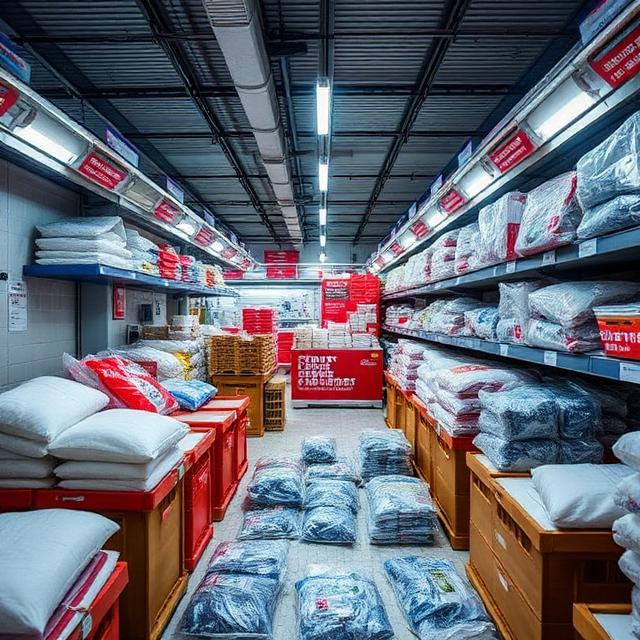
Cold Storage Market (2026 - 2035)
North America commands approximately 35% of the Cold Storage Market, driven by Americold and Lineage Logistics' combined 380+ million cubic feet of capacity
OR, UNITED STATES, July 16, 2026 /EINPresswire.com/ -- According to a comprehensive report by Market Research Future (MRFR), the global cold storage market reached an estimated USD 185.0 billion in 2025 and is projected to grow from USD 204.4 billion in 2026 to USD 501.0 billion by 2035, registering a compound annual growth rate of 10.5%. Two forces are accelerating this trajectory: the global expansion of organized retail food distribution, where perishable goods now account for over 40% of grocery revenues in developed economies, and tightening pharmaceutical storage mandates following the WHO's 2023 updated guidelines on temperature-sensitive biologics.The E-Grocery Revolution: Cold Chain as Consumer Infrastructure
The most visible transformation in the cold storage market is the explosive growth of online grocery and direct-to-consumer perishable delivery. Global online grocery sales surpassed USD 450 billion in 2024, with perishable categories—fresh produce, dairy, and frozen meals—growing at nearly double the rate of ambient goods. Retailers like Amazon Fresh, Ocado, and JD.com's 7Fresh have invested over USD 6 billion collectively in dedicated micro-fulfillment cold facilities since 2022. This shift from ambient distribution centers to temperature-stratified facilities creates sustained demand, particularly in urban and peri-urban zones where last-mile freshness guarantees require decentralized cold nodes within 30 minutes of the consumer.
This shift is not merely additive; it is structural. Traditional cold storage was designed for bulk inbound storage—receiving pallet loads from farms and factories, holding them for weeks or months, and shipping them out in full truckloads. E-grocery demands the opposite: small-batch, high-velocity, multi-temperature fulfillment that can assemble a single customer's order—spanning frozen ice cream, chilled yogurt, and fresh vegetables—in minutes rather than days. This operational model requires an entirely different facility design: smaller footprints, closer to population centers, with automated sortation and temperature-stratified zones that legacy bulk warehouses cannot accommodate.
Urban micro-fulfillment centers under 20,000 square feet provide same-day chilled delivery within a 15-mile radius, reducing last-mile spoilage rates by 35–45% compared to centralized distribution models. These facilities represent a USD 18 billion incremental opportunity through 2035, as labor shortages and increasing throughput requirements drive adoption of automated storage and retrieval systems.
Download Report Sample Copy with TOC: https://www.marketresearchfuture.com/sample_request/9995
Pharmaceutical Cold Chain: The Premium Growth Engine
While food drives volume, pharmaceuticals drive value. The FDA's updated Drug Supply Chain Security Act (DSCSA) enforcement timeline and the EU's GDP Annex 15 qualification requirements have pushed pharmaceutical manufacturers and third-party logistics providers to invest roughly USD 4.2 billion in GxP-compliant cold storage between 2023 and 2025. Cell and gene therapies, mRNA vaccines, and monoclonal antibodies all require ultra-cold environments (−80°C to −20°C), and the clinical pipeline contains over 2,400 temperature-sensitive biologics expected to reach the commercial stage by 2030.
Pharmaceutical and healthcare cold storage is the fastest-growing application segment at a 14.8% CAGR. Regulatory requirements under FDA 21 CFR Part 211 and EU GDP guidelines demand validated storage environments with continuous temperature monitoring, deviation alerts, and full audit trails. This compliance overhead translates into revenue per pallet position that is 2.5–3.5 times higher than food-grade equivalents, attracting specialized operators like World Courier, Marken, and AmerisourceBergen's dedicated cold chain divisions.
The biologics drug pipeline—spanning mRNA therapeutics, CAR-T cell therapies, and biosimilars—requires storage at −20°C to −80°C with full GDP/GxP traceability. Facility construction costs for deep-frozen environments run 40–60% higher than standard frozen, creating meaningful barriers to entry and premium pricing power for incumbent operators. Deep-frozen storage is expanding at a 13.1% CAGR, reflecting surging demand for biologic drug storage and premium frozen food categories.
Technology Transformation: From Ammonia to AI
A sweeping technology shift is reshaping how temperature-controlled facilities operate. Legacy ammonia-based refrigeration systems and manually managed inventory processes are giving way to IoT-enabled monitoring platforms, AI-driven demand forecasting, and natural refrigerant systems using CO₂ and hydrocarbons. The European Commission's revised F-gas Regulation (2024) mandated a 95% phase-down of hydrofluorocarbon use in commercial refrigeration by 2030, forcing operators to accelerate equipment upgrades worth an estimated USD 8.5 billion across the EU alone.
CO₂ transcritical systems carry 15–20% higher upfront costs but reduce energy consumption by 10–15% annually. Most operators achieve payback within 4–6 years through lower electricity and regulatory compliance costs. Replacing high-GWP HFC systems with natural refrigerants generates verified carbon offset credits under the Kigali Amendment framework, with early-mover operators monetizing credits worth USD 8–12 per ton CO₂-equivalent avoided.
Fully automated cold storage facilities, including robotic shuttles, automated storage and retrieval systems (AS/RS), and AI-driven inventory management, minimize manpower dependency by up to 80% and achieve energy efficiency improvements of 30–40% compared to traditional designs. Since 2022, Swisslog, Dematic, and KNAPP have installed more than 200 automated cold storage systems globally. Automation represents an USD 18 billion incremental opportunity through 2035, spurred by the confluence of labor shortages and increasing throughput requirements.
Artificial intelligence will progressively shift cold storage operations from human-supervised to autonomous management by the early 2030s. Machine learning algorithms already optimize compressor cycling patterns and defrost schedules, reducing energy consumption by 15–25% in pilot installations. By 2032, industry analysts project that over 40% of newly constructed cold storage facilities globally will incorporate autonomous inventory management, predictive maintenance, and dynamic energy load balancing—transforming the market from a labor-intensive real estate play into a technology-driven logistics platform.
Buy Now: https://www.marketresearchfuture.com/checkout?currency=one_user-USD&report_id=9995
Regional Dynamics: North America Leads, Asia-Pacific Surges
North America commands approximately 35% of the cold storage market, driven by Lineage Logistics and Americold Realty Trust's combined 380+ million cubic feet of capacity. The United States dominates with 82% of regional revenue, where consolidation has pushed top-five concentration above 40%. Lineage Logistics completed its IPO on the Nasdaq in July 2024, raising approximately USD 4.4 billion in the largest U.S. warehouse REIT listing to date, signaling institutional investor confidence in the sector. Canada's 9.8% CAGR reflects agricultural exports and pharmaceutical logistics, while Mexico's USD 2.9 billion market benefits from a nearshoring boom driving demand along the U.S.–Mexico border corridor.
Europe holds the second-largest share at 28%, anchored by stringent food safety regulations and pharmaceutical logistics demand. The region's market is valued at approximately USD 51.8 billion in 2025, supported by the EU Green Deal's industrial decarbonization incentives. Germany anchors regional demand at 22% of share through automotive-grade pharma logistics and F-gas retrofit programs. The Netherlands and Belgium serve as critical gateway nodes for temperature-sensitive goods entering the EU via the Port of Rotterdam and Antwerp-Bruges. The revised F-gas Regulation is accelerating a EUR 10 billion refrigerant transition across the continent.
Asia-Pacific is the fastest-growing region at a projected 13.2% CAGR, fueled by India's Pradhan Mantri Kisan SAMPADA Yojana and China's 14th Five-Year Cold Chain Development Plan. The region is on track to add approximately USD 95 billion in incremental market value between 2026 and 2035. China added approximately 12 million tons of new cold storage capacity in 2023 alone, with state-backed logistics parks in Guangdong, Shandong, and Sichuan serving as anchor points. India's cold chain is expanding from a low base—only 6% of perishable produce is currently cold-chain managed—creating immense headroom for growth. Japan's market is distinguished by its high automation rate, with over 60% of major facilities deploying AS/RS technology.
South America is valued at USD 11.1 billion in 2025, with Brazil dominating at 58% of regional share through meat and poultry export infrastructure. JBS, BRF, and Marfrig operate integrated cold chain networks spanning farm-gate to port. Chile's seafood industry—particularly salmon farming—drives specialized ultra-cold storage demand along the southern coast.
The Middle East & Africa is advancing at an 11.8% CAGR, driven by food import dependency and healthcare logistics. The GCC states import over 85% of their food, requiring end-to-end temperature management. Saudi Arabia's National Industrial Development and Logistics Program (NIDLP) has earmarked SAR 3.5 billion for food logistics infrastructure, including 15 cold storage mega-facilities planned across Riyadh, Jeddah, and Dammam by 2030.
Product and Segment Landscape
By temperature type, frozen storage (−18°C to 0°C) captures the largest share at approximately 42% of global revenue, driven by processed food and seafood trade volumes. Major operators dedicate over 55% of their total capacity to frozen storage, with multi-temperature facilities increasingly preferred by tenants seeking operational flexibility. Deep-frozen storage (below −18°C) is the fastest-expanding segment at a 13.1% CAGR, driven by biopharmaceutical requirements. Chilled storage (0°C to 5°C) is valued at approximately USD 59.2 billion in 2025, underpinned by fresh produce and dairy distribution.
By application, food and beverages represent 68% of the market by revenue, with meat, poultry, and seafood constituting the largest sub-category. Pharmaceuticals and healthcare is the fastest-growing application at a 14.8% CAGR. Chemicals and industrial applications account for USD 9.3 billion, while others—including floriculture and cosmetics—represent 5% of the market.
By warehouse type, bulk storage warehouses anchor the market with a 45% share, serving agricultural exporters and commodity traders who require high-density, long-duration storage. Distribution centers are the fastest-growing warehouse type at a 12.3% CAGR, as the market pivots toward faster inventory turns and smaller, more frequent shipments driven by e-commerce grocery and pharmaceutical last-mile delivery. Production stores account for USD 31.5 billion, while port and airport facilities are growing at an 11.0% CAGR on international trade in perishable goods.
Headwinds: Capital Intensity, Energy Costs, and Labor Scarcity
The cold storage market faces persistent challenges. High capital expenditure and long payback periods limit participation to well-capitalized operators and REITs. Building a modern 100,000-square-foot facility costs between USD 25 million and USD 45 million, with typical payback periods stretching 8–12 years. Interest rate environments above 5% further compress project-level IRRs, slowing greenfield expansion plans.
Energy cost volatility is a structural vulnerability. Cold storage facilities use 10–20 times more energy per square foot than ambient warehouses, with electricity accounting for 25–35% of total running expenses. In markets with weak grid infrastructure, operators need to invest in backup diesel generation, lowering margins by a further 8–12%. The 2022–23 gas crisis saw European operators' energy prices jump 60%, squeezing EBITDA margins throughout the industry.
Skilled labor shortages constrain operations. The International Institute of Ammonia Refrigeration (IIAR) estimates that North America alone is short by approximately 15,000 skilled refrigeration technicians, leading to increased pay inflation and operational risk. Specialized training is needed for sophisticated refrigeration systems, IoT-enabled facility controls, and hazardous ammonia refrigerants that conventional labor pipelines do not sufficiently deliver.
Fragmented cold chain regulations across jurisdictions add compliance complexity, particularly in Asia-Pacific and South America where standards vary significantly between countries. Land acquisition and zoning constraints near urban centers limit the placement of micro-fulfillment facilities in the precise locations where e-grocery demand is most concentrated.
Read More Report Summary: https://www.marketresearchfuture.com/reports/cold-storage-market-9995
Competitive Landscape
The cold storage market is moderately concentrated, with an estimated Herfindahl-Hirschman Index of approximately 850–1,100. The top five operators control roughly 28–32% of global revenue, while the remaining market is fragmented across hundreds of regional and single-facility operators. Consolidation has accelerated since 2020, with Lineage Logistics and Americold completing a combined 25+ acquisitions in four years, signaling a clear trend toward scale-driven competitive positioning.
Lineage Logistics leads with an estimated 10–14% revenue share, distinguished as the largest global operator with a technology-first strategy encompassing multi-temperature warehousing, transport, and automation. The company's July 2024 IPO raised approximately USD 4.4 billion, validating institutional appetite for cold storage assets.
Americold Realty Trust captures 8–11% as the largest publicly traded cold storage REIT, operating REIT-structured facilities and managed services. Nichirei Corporation holds 3–5% through vertical integration in frozen food production and integrated storage across Japan and Southeast Asia. United States Cold Storage accounts for 2–4% as a regional U.S. leader with mid-Atlantic concentration. NewCold specializes in fully automated deep-freeze facilities at 2–3%, pioneering technology in Europe and Australia.
Emergent Cold Latin America is an emerging market specialist at 1–3%, while Swire Cold Storage, Kloosterboer, Burris Logistics, and Henningsen Cold Storage each hold 1–2% through regional specialization and diversified service portfolios.
Related Report
cold storage construction market https://www.marketresearchfuture.com/reports/cold-storage-construction-market-24743
cold storage tape market https://www.marketresearchfuture.com/reports/cold-storage-tape-market-34279
us cold storage market https://www.marketresearchfuture.com/reports/us-cold-storage-market-14077
chemical warehousing storage market https://www.marketresearchfuture.com/reports/chemical-warehousing-storage-market-37935
warehousing storage services market https://www.marketresearchfuture.com/reports/warehousing-storage-services-market-25888
Market Research Future
Market Research Future
+1 855-661-4441
email us here
Legal Disclaimer:
EIN Presswire provides this news content "as is" without warranty of any kind. We do not accept any responsibility or liability for the accuracy, content, images, videos, licenses, completeness, legality, or reliability of the information contained in this article. If you have any complaints or copyright issues related to this article, kindly contact the author above.
